How to Make Your Dental Practice Stand Out in a Saturated Market
TLDR: To make your dental practice stand out in a saturated market, being “modern and clean” is no longer enough. Your brand, website, messaging, photography, search presence, and marketing need to work together to create a distinct experience that patients notice, trust, and remember.
For years, simply having a professional-looking dental website could set a practice apart. Nowadays, that’s just the baseline. With templates and AI making it easier than ever to create a clean logo or polished-looking website, more dental practices are starting to look remarkably similar.
So if your practice wants to grow in a competitive market, simply looking professional isn’t enough. You need to give the right patients a reason to notice you, trust you, remember you, and ultimately choose you.
Here’s how.
Why Is It So Hard for Dental Practices to Stand Out?
Ten years ago, a modern website could be a differentiator. Today, almost every established dental practice has one. The same is increasingly true of branding. Clean typography, a simple logo, neutral colors, and a polished website aren’t inherently bad, but those things alone don’t make a practice memorable.
At Saltd Studio, we see this problem across dental and healthcare marketing: “good enough” design has become incredibly accessible. As more practices reach that same polished baseline, good design alone has less power to hold someone’s attention. Now consider how many practices a potential patient encounters. They may drive past several dental offices every week and see hundreds of ads and marketing messages. When they actually need a dentist, Google can instantly give them dozens of options, and AI-powered search is giving them even more ways to research and compare those options. In that environment, simply showing up isn’t enough.
More Exposure Won’t Fix a Forgettable Brand
One of the biggest misconceptions we see is treating branding and marketing tools like a checklist for success. Once the logo, website, and social media are in place, the assumption is that the next step is simply getting more exposure. But sending more people to a forgettable brand or generic website doesn’t necessarily solve the underlying problem.
Before investing heavily in getting more eyes on your practice, ask a more important question: When someone does find us, are we giving them a compelling reason to choose us? That’s why we think about your brand and website as the foundation your marketing builds on, not simply design assets.

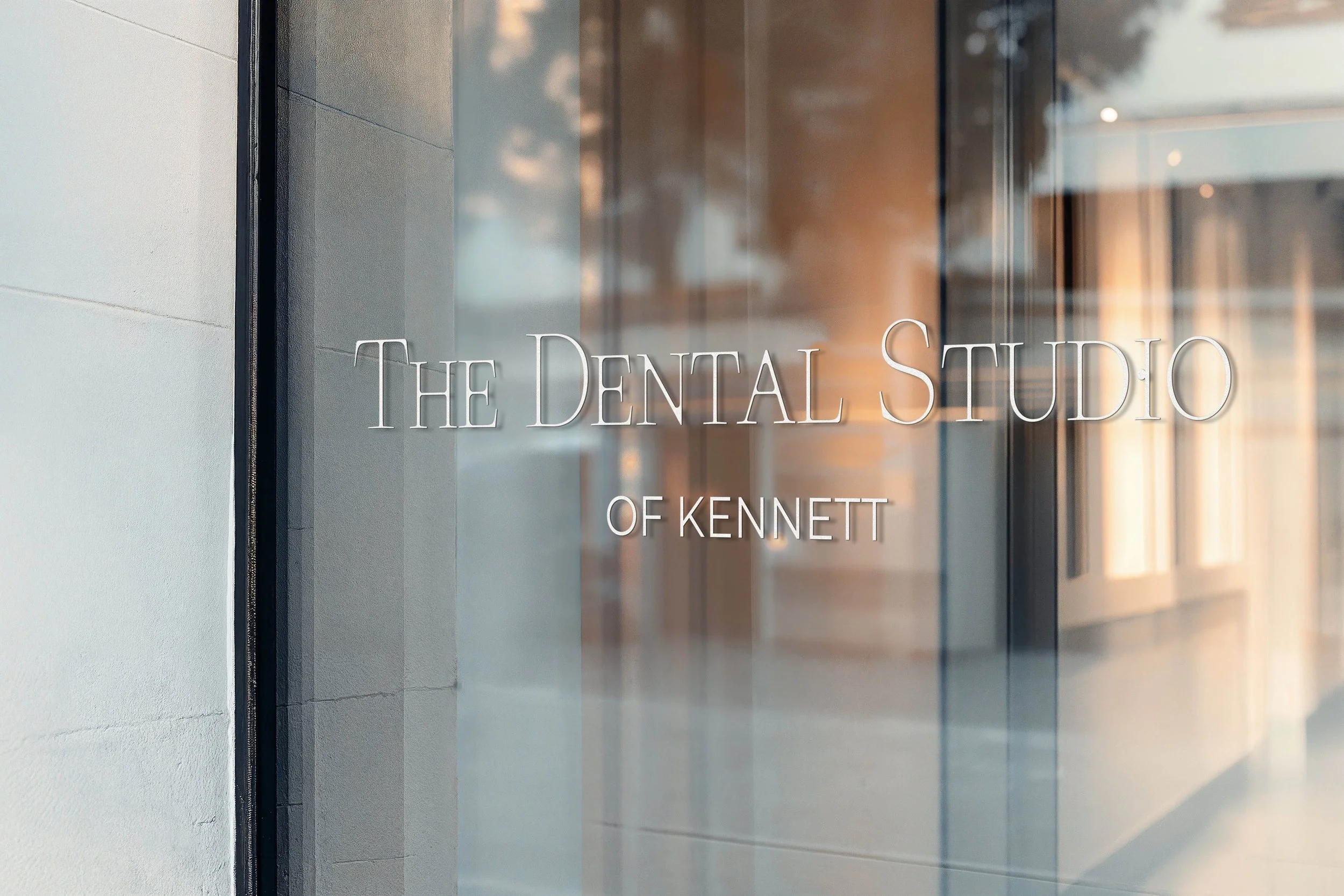
How to Make Your Dental Practice Stand Out in a Saturated Market
Standing out isn’t about being different just for the sake of being different. Your practice still needs to feel credible. Your website needs to be intuitive. Patients still need to understand what you offer and how to book an appointment.
At Saltd Studio, that starts with understanding the market before we start designing.
1. Know What You’re Trying to Stand Out From
You can’t differentiate your dental practice if you don’t understand what everyone else is doing. That’s why competitor research and brand strategy are an important part of the process.
Look at other dental practices in your market:
What do their websites look like?
What colors, fonts, and visual styles keep appearing?
How are they describing themselves?
What services are they emphasizing?
What promises are they making?
What does the photography look like?
Does every practice seem to be saying essentially the same thing?
This gives you important context for your own brand and helps uncover opportunities to do something more distinct. At Saltd Studio, this research is one of the first steps in the branding process. We pair it with a deeper onboarding process that explores the client’s goals, preferences, inspirations, personality, and vision for the practice. From there, we create a custom direction rather than starting with a pre-built dental template.
2. Stop Treating Your Brand Like It’s Just a Logo
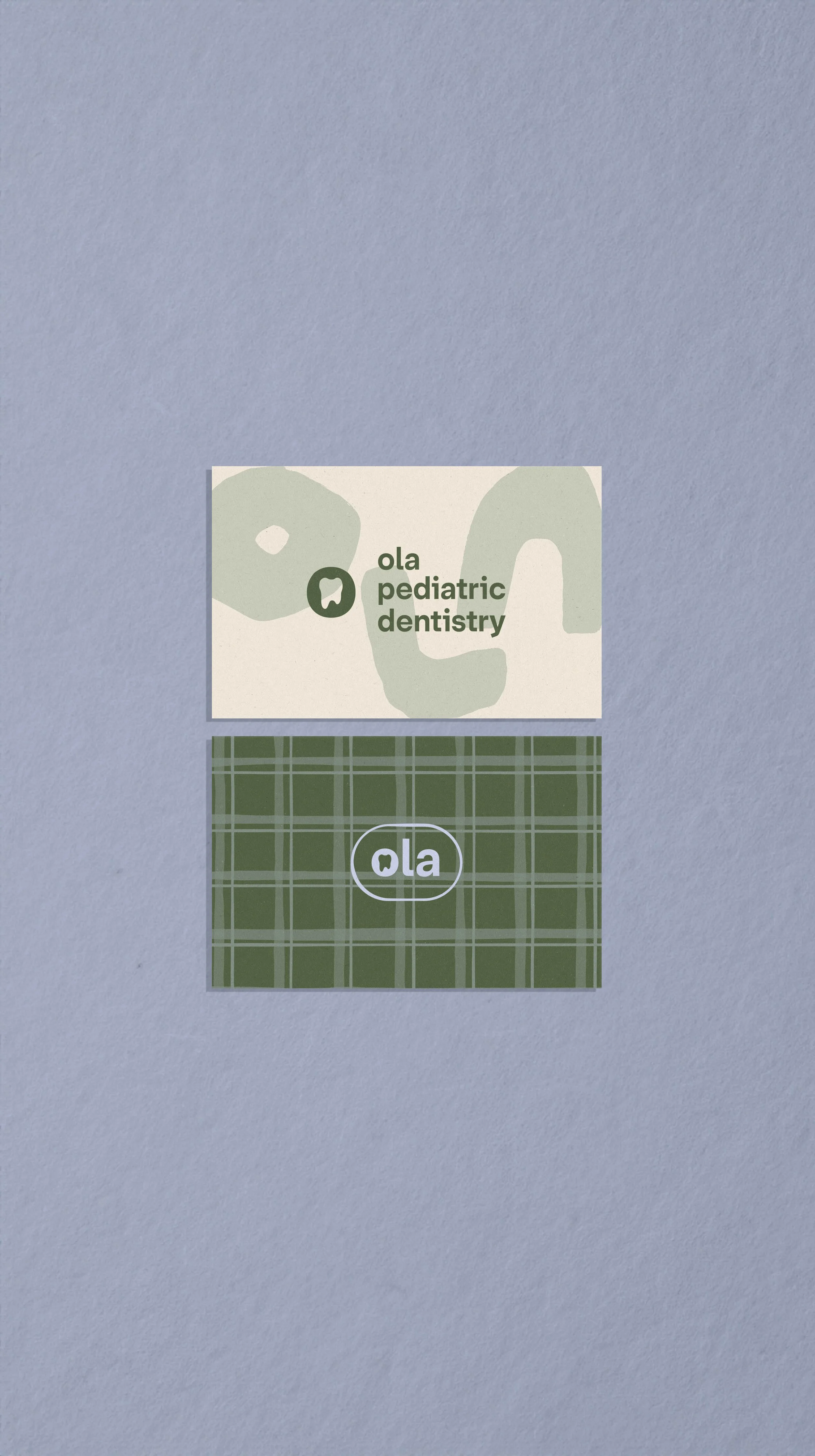
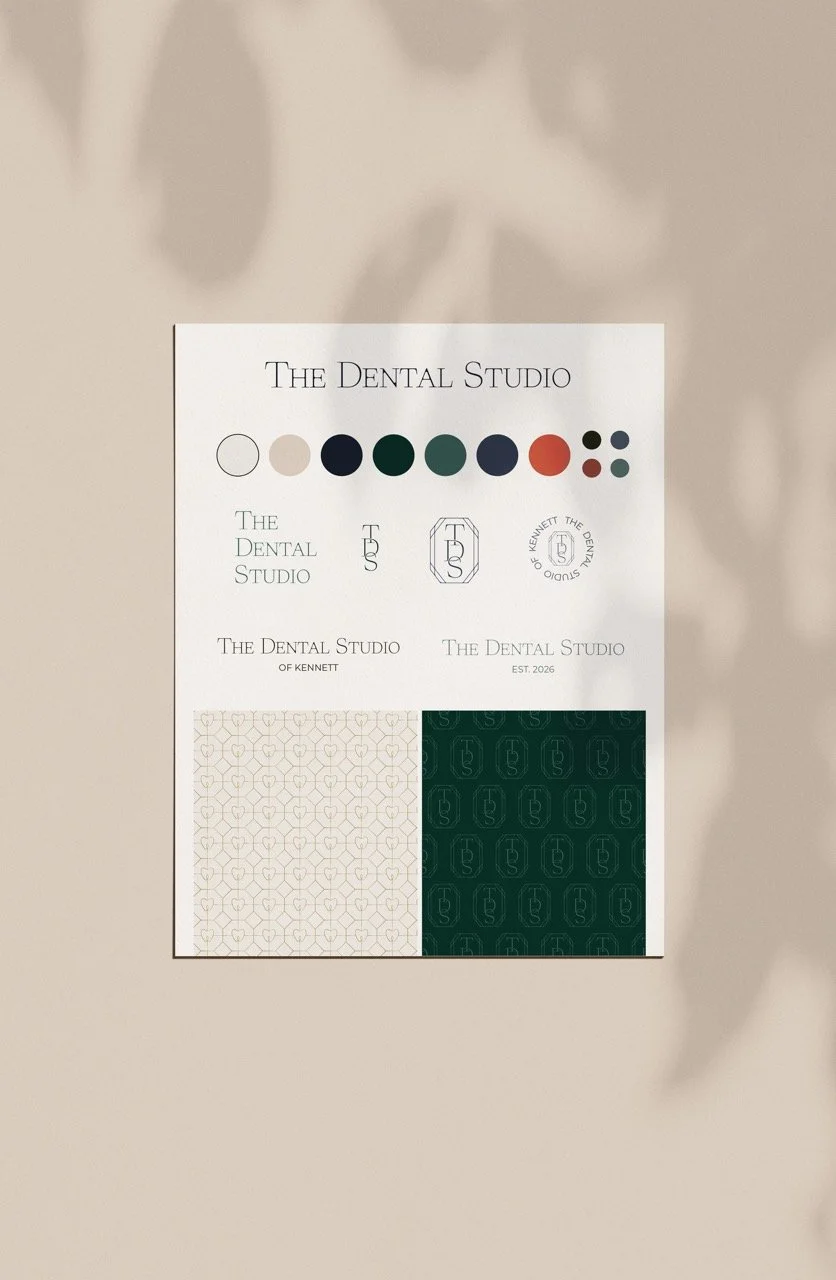
A strong dental brand is much bigger than a logo. It’s the combination of visual and verbal elements that shapes how someone experiences your practice before they ever walk through the door.
That includes your:
Logo and visual identity
Colors and typography
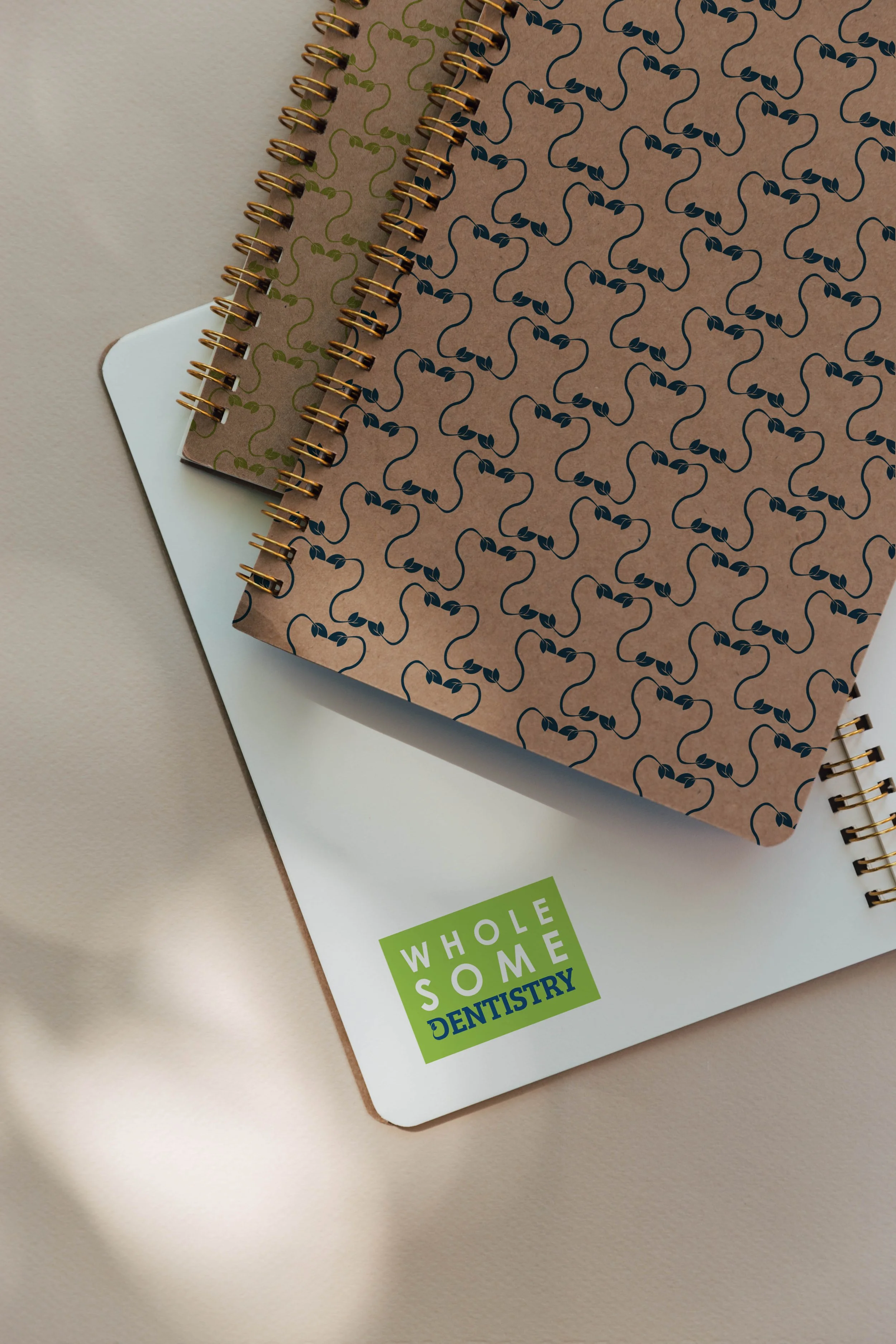
Icons, patterns, and illustrations
Photography
Messaging
Brand voice
Website
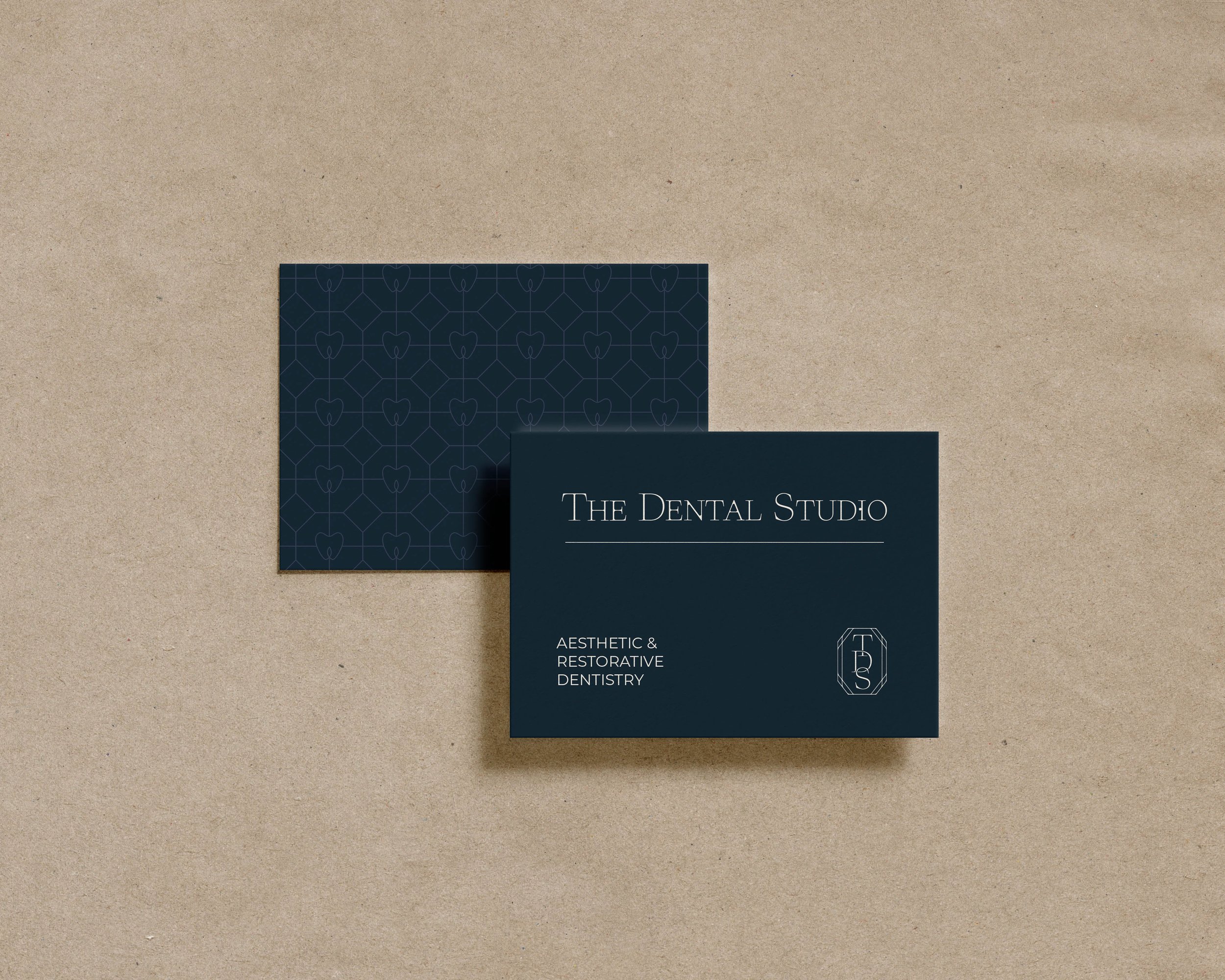
Marketing materials
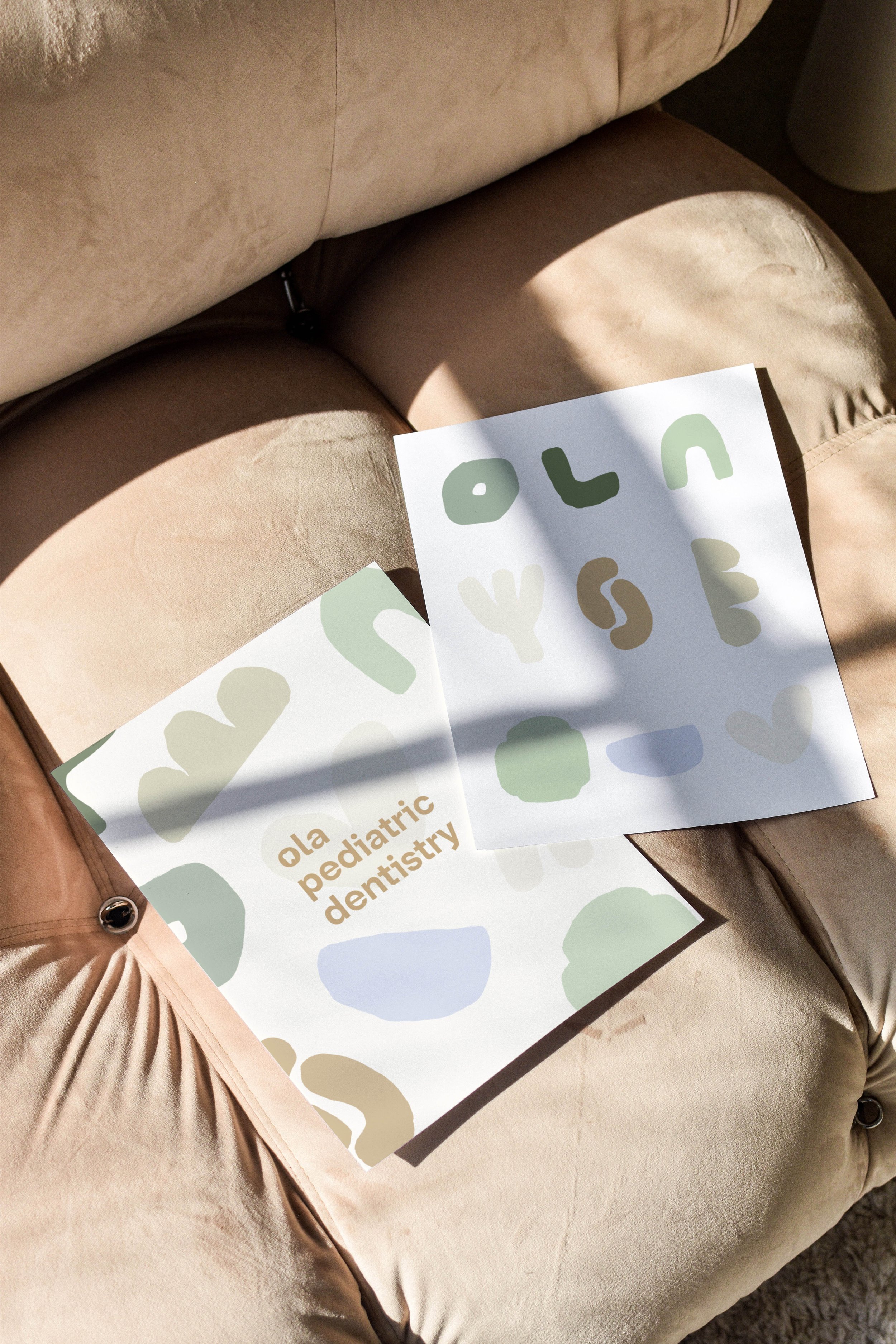
These details may seem small individually, but together they create a cohesive impression. That’s where custom branding has an advantage over something designed simply to look “professional.” It gives patients a better sense of your practice, its personality, and what they can expect from you in a way a generic template rarely can.
3. Use Real, Professional Photography
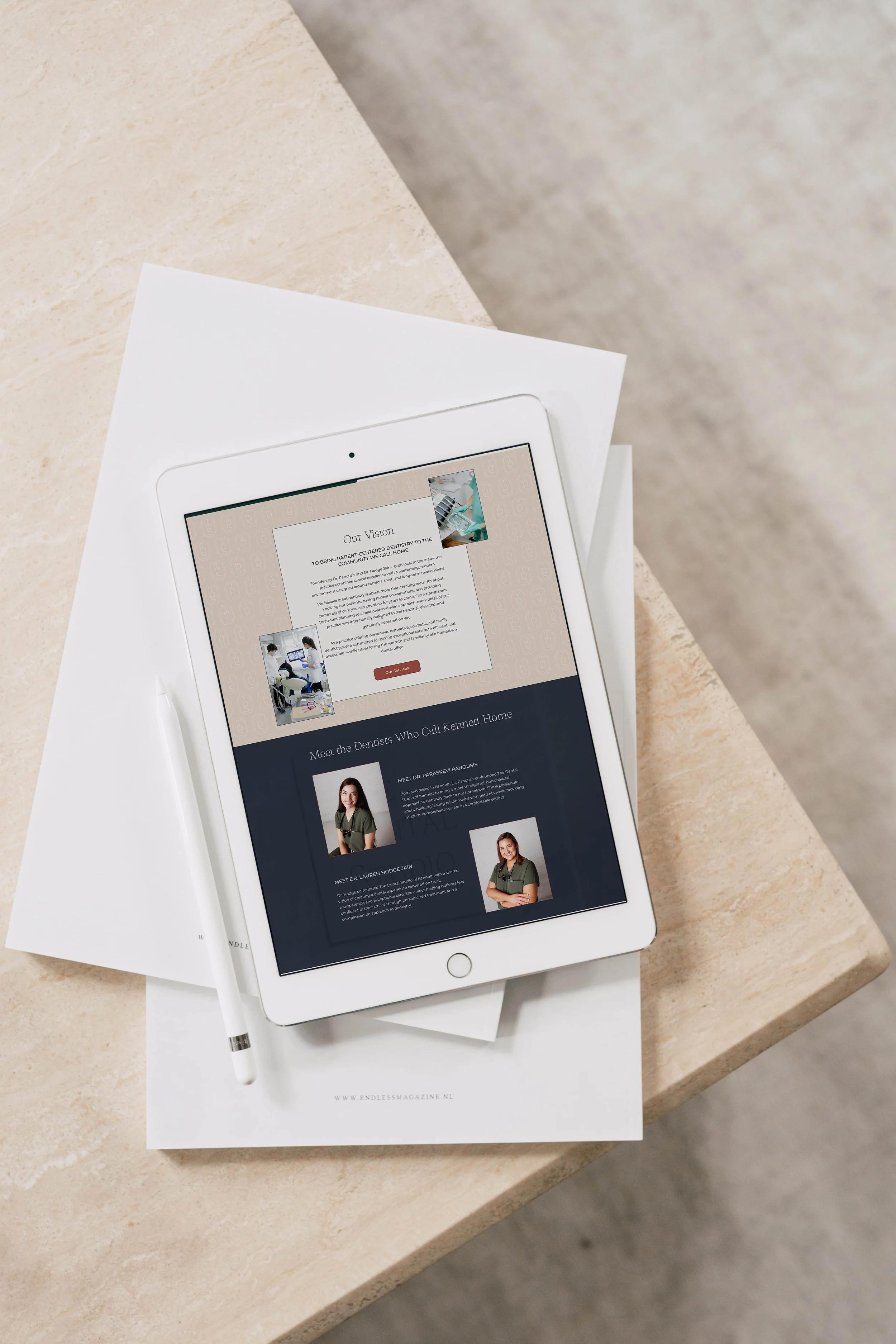
You’ve seen the photos: the impossibly perfect patient sitting in a dental chair, a dentist holding a toothbrush, or a generic smiling family that could appear on practically any healthcare website. Professional photography gives prospective patients something stock photos can’t: a real look at the people and place they’re considering trusting with their care. Show your actual dentists, your team, your office, and your personality, then integrate that photography intentionally with the rest of your visual brand. The result feels less like “a dental website” and more like your dental practice.
4. Make the Website Unique Without Making It Difficult to Use
Differentiation doesn’t mean throwing usability out the window. A dental website still needs to make sense to someone who isn’t particularly tech-savvy. Patients should be able to quickly understand what you offer, find the information they need, and know how to take the next step. The challenge is finding the balance between familiar functionality and distinctive design.
That’s where the details matter. Custom layouts, brand patterns, thoughtful typography, icons, color usage, photography, movement, and small interactive elements can create a much more memorable experience without forcing someone to figure out how your website works. Patients shouldn’t have to think about how to use your website, but they should remember it.
5. Don’t Forget That Your Words Are Part of Your Brand
Visual differentiation gets most of the attention, but there’s another major opportunity many dental practices overlook: what you actually say. A practice can invest in beautiful branding and then fill its website with the same language as every competitor: “Comprehensive dental care,” “state-of-the-art technology,” and “your smile is our priority.”
There’s nothing inherently wrong with clearly describing your services. In fact, clarity matters for both patients and search engines. But your brand voice should go further. How does your practice think about care? What do your ideal patients value? What makes the experience different? What does your team believe that another practice might not?
Your messaging is part of your brand, just like your logo, colors, photography, and website. When the visuals and language reinforce each other, the entire practice becomes more recognizable.
Your Brand and Website Should Make Your Marketing Work Harder
This is where differentiation moves beyond aesthetics. Someone might see your practice on a billboard, remember your name, search for you later, visit your website, read reviews, and compare you with another practice before deciding. The same goes for social ads, mailers, sponsorships, referrals, and other marketing channels. Eventually, many of those potential patients end up interacting with your broader online presence.
That’s why it’s worth asking not only, “What marketing tactic should we try next?” but also, “What happens after our marketing gets someone’s attention?” When your brand, website, and messaging reinforce what makes your practice different, each marketing effort has a stronger foundation to build on.
Standing Out Doesn’t Matter If Patients Can’t Find You
There’s another important side to this equation. You can have the best-looking dental brand in your city, but it won’t drive growth if no one can find it.
That’s why differentiation and visibility need to work together. Search engine optimization can help your practice appear when someone is actively looking for a dentist or a specific service. Your Google Business Profile can help you compete in local search and Google Maps. Paid advertising can introduce your practice to more potential patients. And as AI-powered search grows, practices increasingly need to consider how they appear beyond traditional Google results.
That’s why we see your brand, website, SEO, and marketing as parts of the same system. Together, they help patients find you and make sure what they find gives them a reason to remember and trust your practice.
Be Careful With One-Size-Fits-All Dental Marketing
Another frustration we’ve seen is practices hiring a local marketing provider that works with virtually every kind of business. That doesn’t necessarily mean the agency does bad work. But dental marketing can be extremely competitive, and tactics that work well for one type of local business don’t always translate to healthcare. At the other end of the spectrum, dental-specific providers may understand the industry but rely heavily on standardized templates and processes. You shouldn’t have to choose between industry knowledge and custom work. Look for a marketing partner who understands how dental patients search and make decisions while still taking the time to understand what makes your practice different.

What Does This Look Like in the Real World?
Maven Dentistry, a family-owned general and cosmetic dental practice in Albuquerque, came to Saltd Studio after struggling to gain traction online. Their previous website was modern, but there wasn’t much about it that differentiated the practice from other dentists in the market. They had also invested thousands of dollars into SEO without feeling like it had produced meaningful results. We helped Maven build a more complete online presence through a strategically structured website, supported by SEO and ongoing marketing.
The result wasn’t simply a prettier website. Maven Dentistry saw strong year-over-year digital growth, including:
92% increase in website traffic
59% increase in Google Maps visibility
27% increase in high-intent direction requests
92% increase in visibility within Google’s generative AI search experiences compared with its earlier reporting baseline
Their experience is a good example of why we don’t believe dental practices need more random marketing. They need the pieces to work together. Explore the full case study to see what led to these results for Maven Dentistry.
So, What Actually Makes a Dental Practice Different?
Your differentiator isn’t necessarily one groundbreaking service that no other dentist offers. Most practices in a market will naturally offer many of the same services. Differentiation often comes from the complete experience you create around those services: how your practice looks, how it sounds, how it makes patients feel, how easily they can find you, what they see when they search your name, and how confident they feel choosing you.
That’s why standing out requires more than a logo redesign or a new homepage. It requires creating a recognizable marketing foundation and carrying it consistently through every place a prospective patient encounters your practice. At Saltd Studio, that’s exactly what we help dental and healthcare practices build. If your practice is ready to stop blending in, let’s talk.
Key Takeaways
A professional-looking dental brand is no longer enough on its own to make a practice memorable.
Strong dental branding brings your visuals, messaging, photography, and website together into one recognizable experience.
More exposure works best when your brand and website already give patients a reason to choose you.
SEO and marketing help patients find your practice, while a distinct brand gives them a reason to remember it.
A custom dental website can feel unique without making the patient experience complicated.