Your Practice Is Doing All the “Right” Marketing. So Why Isn't It Working?

TLDR: If your dental marketing isn't working even though you have a website, post on social media, invest in SEO, or try other forms of advertising, it doesn't necessarily mean those strategies don't work. Marketing has become more competitive and fragmented, and simply checking the boxes is no longer enough. Your strategy, execution, brand, website, content, and visibility all need to work together.
If you’ve been practicing for a while, you probably remember when things felt a little simpler. Patients came in consistently, referrals were strong, and you didn’t have to think nearly as much about your website or keeping up with whatever the social media algorithms decided to do that week. Maybe you did a little networking or advertising here and there, and that was enough.
Then something changed. There are more practices in town now, some with flashy new websites and marketing. New patient numbers may not be quite what they used to be.
So naturally, you start looking for ways to keep up. Maybe you’re paying an agency for SEO, someone on your team posts on Instagram, and you’ve experimented with radio, magazines, networking groups, boosted posts, or paid ads. Some of it does something. But when you look at everything you’re spending and doing, you’re still left with the same question: Why doesn’t it feel like our marketing is actually working?

Why Isn't My Dental Marketing Working?
There isn't one universal answer. But when we talk to dentists and healthcare practice owners who feel like they're doing everything right, we often find that they're using strategies that technically make sense but aren't being executed at the level required to compete today.
Having a website still works, and so do SEO, social media, and content. But the bar has gotten higher. There are more businesses competing for the same attention, more content being created, more places for patients to search, and more sophisticated advertising available to your competitors. What worked five or ten years ago may not be enough today.
1. Posting on Social Media Isn't a Strategy Anymore
There was a time when simply being active on social media gave businesses an advantage. Today, your practice is not only competing against other dentists, but also against friends, influencers, creators, celebrities, news, entertainment, and everything else someone sees when they open Instagram or Facebook.
Posting a graphic three times a week and hoping prospective patients see it isn't much of a growth strategy anymore. But even with how saturated social media has become, that doesn't mean you should stop posting. It just means the content needs to get better. For many dental practices, that could mean creating more original short-form video content and showing actual people instead of relying on polished graphics that immediately look like ads. You could:
Have the dentist answer a question patients constantly ask
Show the office or introduce the team
Explain a treatment
Address something patients are nervous about
Create something useful, interesting, funny, relatable, or local
It's to create something people might actually stop scrolling to watch, engage, and connect with.
2. Organic Social Media May Need Help From Paid Ads
Creating enough organic content to consistently reach new people takes time and effort, and most dentists don't have much of either to spare. That's where paid social media can become an important part of the strategy. But there's a big difference between running social media ads and running good social media ads.
You can create a generic graphic, add some text, put money behind it, and technically say you're advertising on Meta. That doesn't mean it's going to work. Good paid social needs a strong hook, a reason for someone to take action, and creative that feels native to the platform, whether that's a Reel featuring the dentist, a patient story, or content created with someone local. The point isn't that every dentist needs to become an influencer. It's that putting money behind mediocre content doesn't magically turn it into good marketing.
3. Google Has Changed Too
If you feel like Google used to be simpler, you're not imagining it. What someone sees when they search can depend on several factors, including their location, the words they use, and what Google determines is most relevant to them. Someone on one side of town may see different dental practices than someone making the same search somewhere else. On top of that, organic results now compete for attention with paid ads, Google Maps, AI Overviews, and everything else filling the search results page.
Patients also have more ways to research their options outside of traditional Google search, including AI tools like ChatGPT and Claude. With search becoming more fragmented, obsessing over a single ranking doesn't tell you much about your overall visibility anymore. The better question is: Can your practice consistently show up when people in your market are searching for the dental services you provide?
4. Your Dental SEO Content Can't Be Generic
The rise of AI has made it incredibly easy to produce content. But that doesn't mean all that content is useful. If your dental SEO strategy is publishing generic posts like “5 Tips for a Healthy Smile” because someone told you blogging helps SEO, you're probably not getting much of an advantage.
Your content should focus on what prospective patients are searching for and give them genuinely useful answers when they find you. Answer real questions, explain your professional opinion, share experience from your practice, address concerns people have before treatment, talk about pricing when appropriate, compare options, and explain what someone should expect. Good SEO content isn't about filling a website with articles. It's about becoming a genuinely useful resource for the people you're trying to reach.
5. Your Dental Practice Might Be Too Forgettable
This is the piece we think gets overlooked most often. Let's say you fix everything we've talked about. Your SEO improves, you run better ads, and your social content reaches more people. Great. But what happens when those people actually find your practice?
Dental practices can look incredibly similar: a last name, a tooth logo, a blue or green color palette, a stock photo of someone smiling, and a headline about creating beautiful smiles. Drive through town, and you may pass dozens of practices that blur together. Search Google and you encounter another sea of options. And from a patient's perspective, the dentist they've been seeing for years might seem perfectly fine. Why should they switch to you?
At Saltd Studio, we believe a strong brand identity has become part of the new baseline for practices that seriously want to grow. Not because every dentist needs a fancy logo, but because getting someone's attention is only part of the job. Your brand also needs to give them something to recognize, remember, and connect with.
6. Your Dental Website Can't Just Exist
A modern-looking website isn't necessarily a good website. We've seen plenty of dental practices that technically had everything they needed. But there was also nothing particularly compelling about it. Your website needs to do more than prove your practice exists. It should quickly help prospective patients understand:
Who you are
What you offer
Whether you can help them
Why your practice is different
Whether they trust you
What they should do next
It should also be structured so search engines can understand your services and your practice. A beautiful website without a search strategy has limitations, and SEO sending people to a weak website has limitations too. The pieces work better together.
7. Stop Piecing Your Dental Marketing Together
This is where a lot of practice gets stuck. One person does SEO, someone else built the website, the front desk posts on Instagram when there's time, another company runs ads, and every once in a while, you buy a local magazine or radio ad. Technically, you're doing a lot of marketing, but who is making sure it all works together?
Your brand shapes your ads, your ads send people to your website, and your website affects whether they take the next step. When those pieces are disconnected, you can spend a surprising amount of money while feeling like nothing is really happening. More marketing isn't always the answer. Better-connected marketing often is.
Why Some Dental Marketing Strategies Fall Short
“We tried SEO before, and it didn’t work.” This is one of the biggest mental hurdles we see. Maybe you hired someone to do SEO and nothing happened, paid someone to create social media content that didn't generate patients, or boosted a few posts without seeing much come from it.
We understand why practice owners come to that conclusion. Spending money on something that doesn't produce a return is frustrating, especially when you're already juggling everything else that comes with running a practice. But before writing off an entire marketing channel because one attempt didn't work, ask why it didn't work the way you did it.
Was the strategy wrong?
Was the creative weak?
Was there enough budget?
Did you give it enough time?
Were you targeting the right people?
Was the website converting?
Was the offer compelling?
Was your SEO actually targeting the searches prospective patients make?
Those questions are more useful than deciding marketing simply doesn't work for your practice.
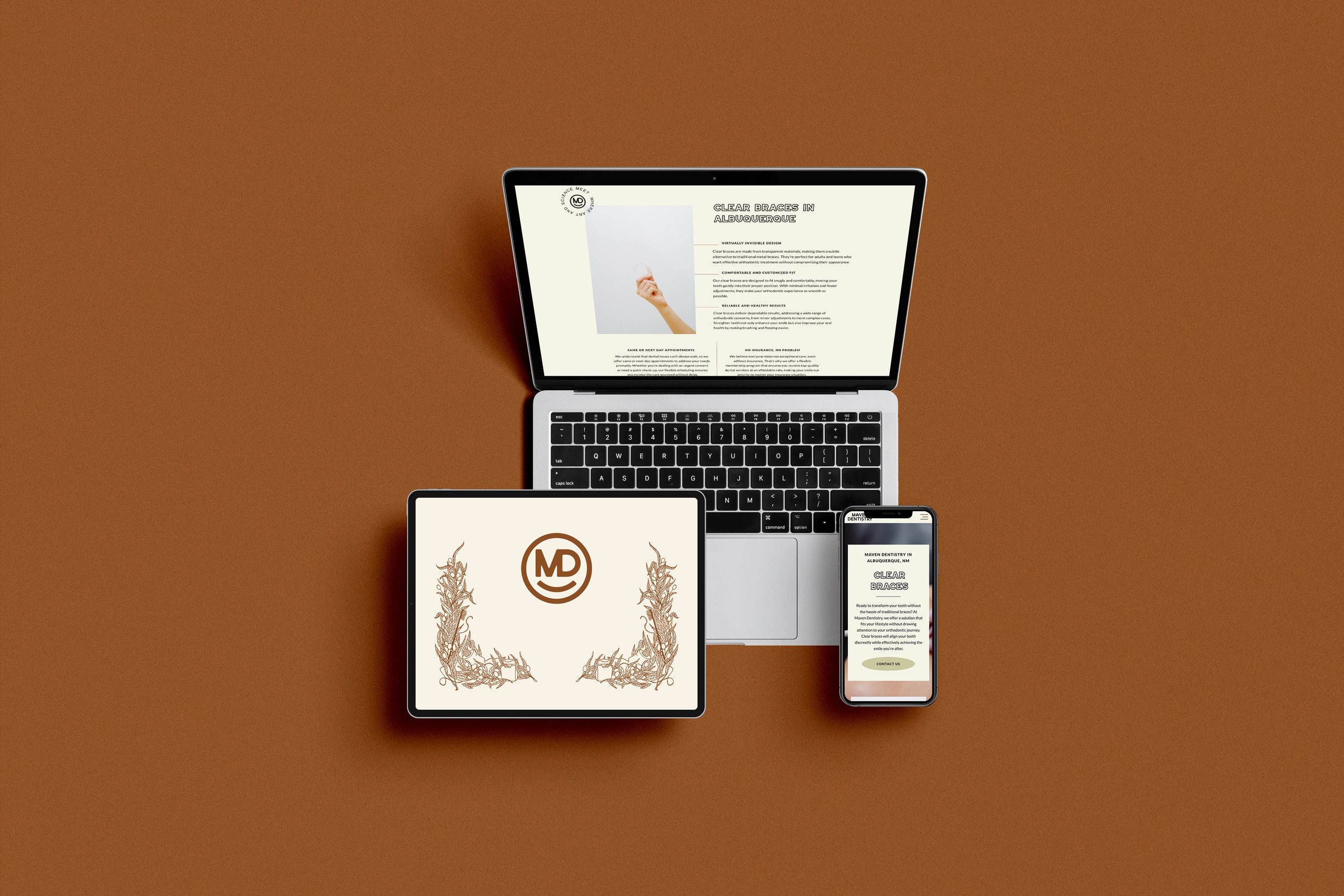

What Changed When We Worked With Maven Dentistry
We've seen this firsthand with Maven Dentistry, a family-owned general and cosmetic dental practice in Albuquerque. Before working with us, Maven wasn't starting from zero. They had a modern enough website, photography and team headshots, and someone locally working on their SEO. On paper, many of the boxes were checked.
But they still weren't getting the visibility they wanted. Instead of adding another isolated tactic, we looked at how everything was working together. We rebuilt and restructured the website, brought their brand to life in a more memorable way, helped them get stronger photography, improved their search presence, and supported their social media and paid advertising.
The results included:
92% increase in website traffic
59% increase in Google Maps visibility
27% increase in high-intent direction requests
92% increase in visibility within Google's generative AI search experiences compared with its earlier reporting baseline
Maven didn't need another marketing tactic added to the mix. They needed a stronger foundation and a more connected strategy. Read the Maven Dentistry case study to see how it all came together.
What Should You Fix Before Spending More on Dental Marketing?
If your marketing feels like it isn't working, the answer isn't always to add another tactic. Before spending more, take a closer look at the foundation you already have and where things might be falling short:
Can people find you?
Look at where your practice is showing up when prospective patients search, from Google and Google Maps to relevant service searches and AI-powered discovery.
Do you stand out when they find you?
Take an honest look at your brand and website next to other practices in your market. If everyone looks and sounds the same, patients don't have much reason to remember one over another.
Does your website turn attention into action?
Getting someone to your website is only half the job. They should be able to quickly understand what you offer, feel confident in your practice, and know what to do next.
Are you creating content people actually want?
Don't post just to post. Create content around the questions, concerns, and topics your prospective patients genuinely care about.
Are you using paid marketing strategically?
Paid search and social can help you reach more people, but where you spend your budget and what you're putting in front of them matter just as much.
Does everything work together?
Your brand, website, SEO, advertising, social media, and content shouldn't feel like separate efforts. Each piece should support the same bigger strategy.
You don't necessarily need to fix everything at once. Start with the areas that are holding your marketing back, then decide where your time and budget will make the biggest difference. The stronger the foundation, the more your future marketing efforts have to build on.
Your Dental Marketing Probably Isn't Broken. The Standard Has Changed.
Marketing a dental or healthcare practice is harder than it was five or ten years ago. There's a lot more noise and a lot more competition for people's attention. That doesn't mean marketing stopped working. It means the standard for good marketing got higher.
You can't cut corners and expect the same results you might have gotten years ago. Build the foundation, create something worth noticing, show up where people are actually looking, invest in reaching them, and give them a reason to trust you when they find you. Most importantly, make sure all of those pieces are working together.
If you're doing all the “right” marketing and still wondering what the heck is going on, get in touch with our team here at Saltd Studio. We'll help you figure out what's missing.
Key Takeaways
Dental marketing still works, but simply having a website, posting on social media, or publishing blogs isn't enough on its own.
Google and social media have become more competitive, making stronger content and a more strategic approach increasingly important.
A distinctive brand and strong website give your other marketing efforts a better foundation to build on.
If a marketing channel hasn't worked before, look at the strategy and execution before deciding the channel itself doesn't work.
Your brand, website, SEO, content, advertising, and social media work better when they're connected rather than treated as separate efforts.