Building a Direct Primary Care Practice People Understand, Trust, and Remember
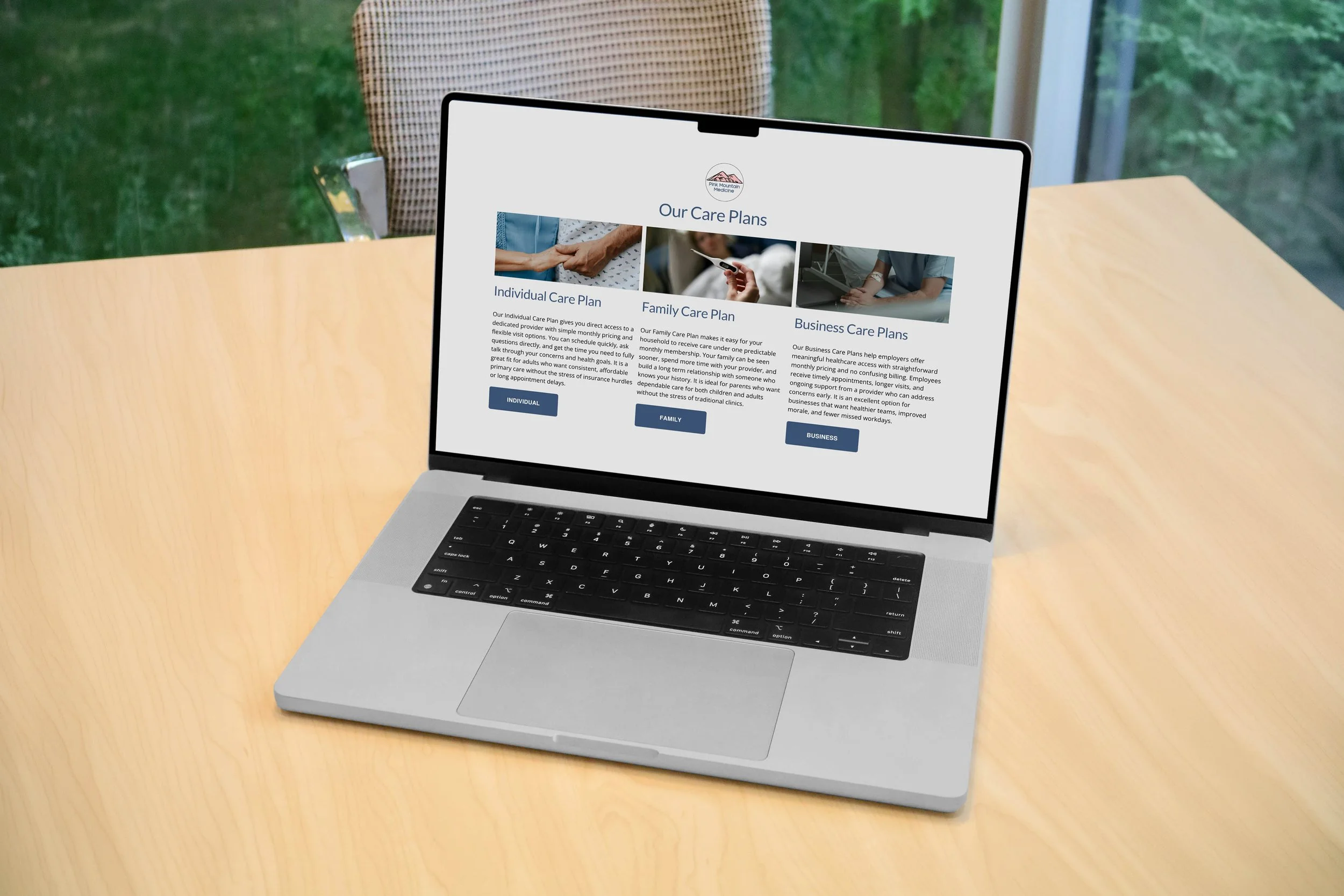
TLDR: Effective direct primary care marketing helps prospective patients understand how your practice works, feel confident in the people providing their care, and know how to take the next step. Your website, messaging, local search presence, content, and visual identity should work together to create that experience.
Direct Primary Care already gives practices an interesting place to start with their marketing. The model responds to real frustrations people have with conventional healthcare, which gives you a meaningful story to tell beyond the services you provide. So how do you turn that into stronger marketing for your practice? We’ll walk through a few ways to do it, along with how we approached it for Pink Mountain Medicine.
Direct Primary Care Has a Different Marketing Challenge
Direct Primary Care practices aren't only marketing their providers and services. They may also need to introduce a healthcare model that prospective patients don't fully understand yet, which creates a few challenges that traditional primary care practices may not face in quite the same way.
Some of the biggest challenges include:
Explaining an unfamiliar model without overwhelming people with information
Communicating the value of membership beyond simply listing what's included
Building trust in the provider while also educating people about the practice model
Standing out from other DPC practices that may offer similar membership structures
Reaching local patients who aren't searching for "Direct Primary Care" yet but are looking for a different primary care experience
The challenge is balancing education with connection. People need enough information to understand how DPC works, but your marketing should also give them a reason to remember your practice once they do.

How to Build a Stronger Direct Primary Care Marketing Strategy
Good DPC marketing considers the whole experience someone has before becoming a patient. From the first search to the moment they're ready to join, each part of your marketing should answer the right questions and make the next step easier.
Lead With What Patients Actually Want to Know
Start with the questions patients are likely to ask, not the terminology your industry uses internally. What does membership include? How much does it cost? What services are available? Can families join? Put those answers where they're easy to find so prospective patients don't have to do extra homework just to understand what you offer.
Let Patients Get to Know Their Provider
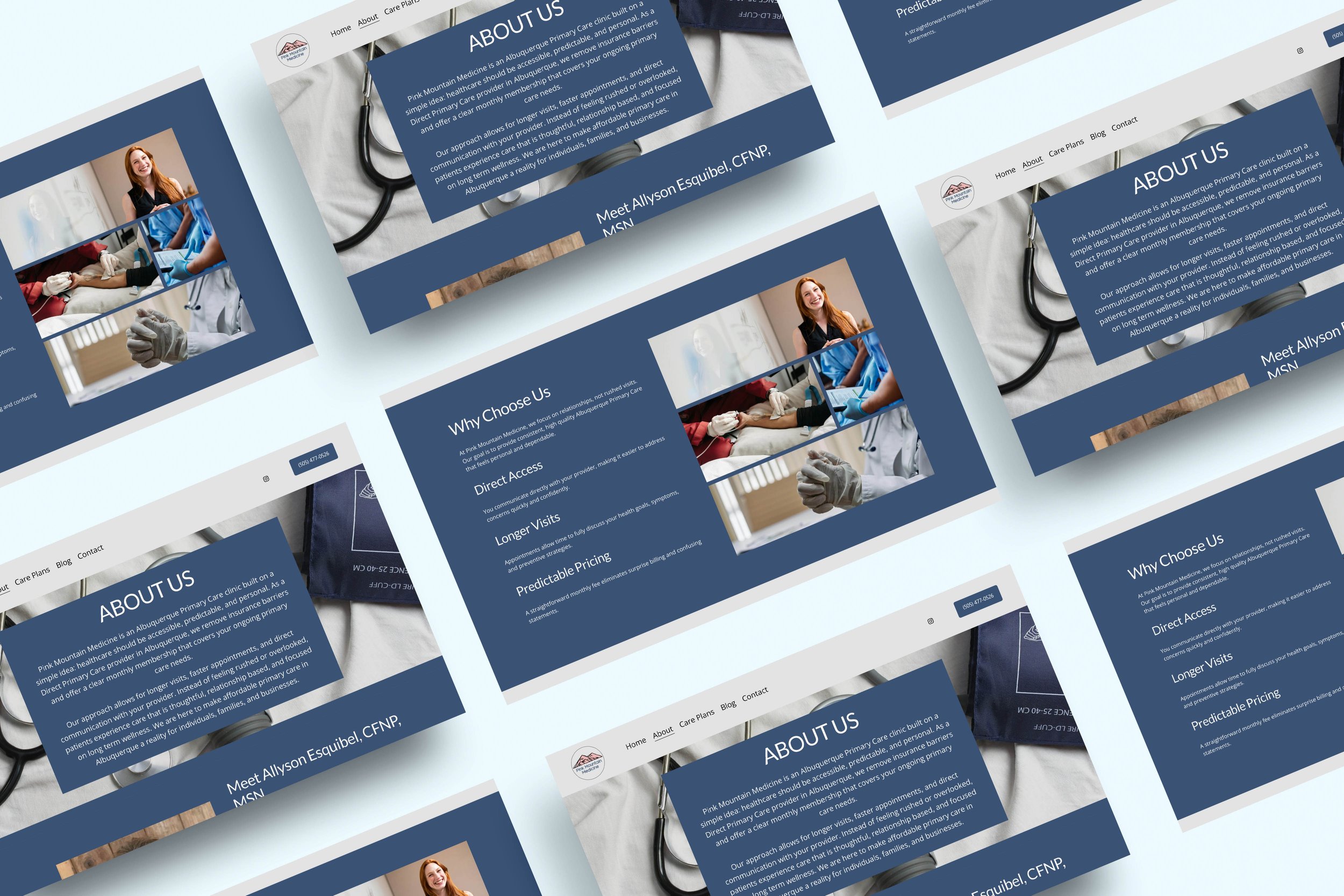
One of the strengths of DPC is the opportunity for a closer provider-patient relationship, so your marketing should introduce the person behind that relationship. Go beyond credentials to share your approach to care, why you chose DPC, and what patients can expect when they come in. Original photography can help here too, giving people a more genuine feel for the provider and practice than generic medical imagery ever could.
Create a Presence People Can Recognize
Trust matters in healthcare, but trust doesn't require looking like every other healthcare practice. Your colors, typography, photography, messaging, and tone can have personality while still feeling appropriate for the setting. Together, those details help people recognize your practice whether they find you through Google, your website, social media, or somewhere in the community. The goal isn't to stand out just for the sake of it. Your identity should feel consistent with the experience patients can actually expect from your practice.
Turn Common Patient Questions Into Useful Content
Your front desk, providers, and new-patient conversations can tell you a lot about what to publish. Questions about insurance, family memberships, employee memberships, or how DPC works can become FAQs, blog posts, service-page content, emails, or social posts. That gives prospective patients useful answers while giving your website more depth. Sometimes the content calendar is already sitting in your inbox.
Make Local Search Part of the Plan
People looking for a primary care provider often start with a local search, so make your location and services easy for both people and search engines to understand. Keep your Google Business Profile accurate, collect patient reviews where appropriate, maintain consistent business information, and create useful website content around the services and area you actually serve rather than wedging a city name into every available paragraph.
Build Your Website Around the Next Question
A good DPC website anticipates where someone's curiosity will take them next, from understanding how DPC works to comparing memberships, exploring services, meeting the provider, checking pricing, and figuring out how to enroll. That means creating clear paths so visitors can find the information that matters to them without digging through pages that aren't relevant to their needs.
Putting It Into Practice With Pink Mountain Medicine
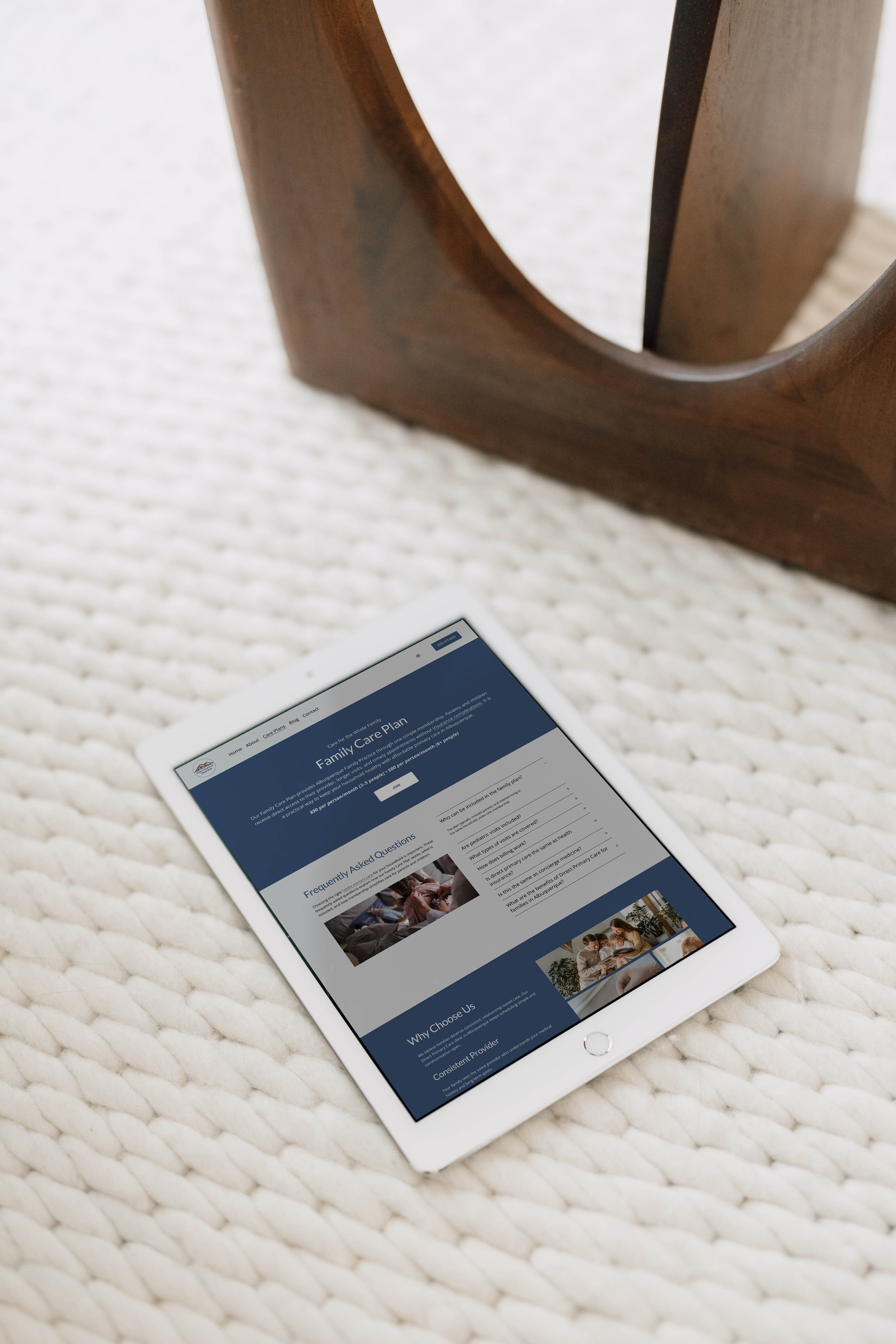
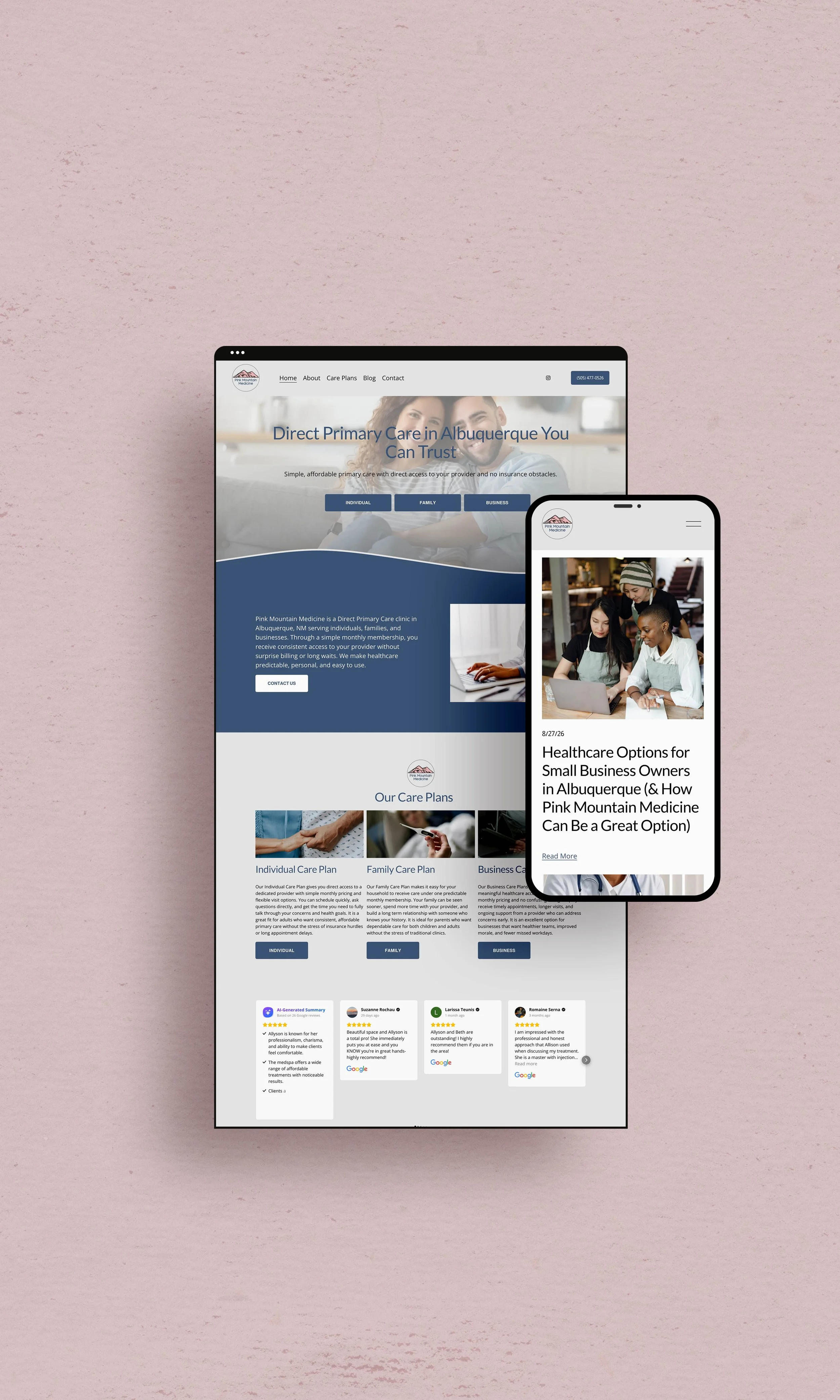
Pink Mountain Medicine offers Direct Primary Care memberships in Albuquerque for individuals, families, and businesses. Their website needed to organize those options clearly while still feeling personal to the practice.
We kept pricing and membership information easy to find and built a clear path through the site. Along the way, visitors also get to know Pink Mountain Medicine's provider and approach to care. It's a good example of how a DPC website can educate without making education the entire experience. You can see these ideas in action on their live website.
Frequently Asked Questions
How can a direct primary care practice attract new patients?
Make your practice visible where local patients are already looking and give them enough information to evaluate it before they contact you. Search visibility, referrals, reviews, educational content, and community relationships can all contribute to patient growth.
What should a direct primary care website include?
Include your services, membership options, provider information, location and contact details, frequently asked questions, and a clear way to join or inquire. Pricing and information about how DPC works can also help patients evaluate the practice before reaching out.
Does SEO work for direct primary care practices?
SEO can help a practice appear when local patients search for primary care providers, DPC options, or related healthcare questions. A strong local search strategy usually includes an optimized website, Google Business Profile, useful content, and accurate business information across the web.
How can you explain direct primary care to prospective patients?
Use plain language and focus on the details patients care about, such as how membership works, what's included, how appointments are scheduled, and where insurance does or doesn't come into the picture. Examples and FAQs can make unfamiliar parts of the model easier to understand.
When should a Direct Primary Care practice rebrand?
A rebrand may be worth considering when the practice has grown beyond its original identity, expanded its services or audiences, or has branding that no longer reflects the patient experience. It can also be an opportunity to make your website, messaging, and visual identity feel more consistent as the practice grows.
Make Your Marketing as Thoughtful as Your Care
A lot of intention goes into building a DPC practice. And that should show in your marketing too. Every touchpoint should feel considered and make the experience clear before someone ever walks through the door.
Whether you need to refine your brand, rethink your website, improve your search visibility, or connect the pieces into a more cohesive strategy, our team can help. Let’s bring your DPC marketing onto the same page.
Key Takeaways
DPC marketing often needs to educate prospective patients while introducing the individual practice at the same time.
Clear membership details, pricing, and patient-focused messaging give prospective patients the information they need to evaluate the practice.
Your branding and provider story help people remember the practice behind the membership model.
Local SEO and useful content can help you reach people who need primary care, even if they aren't already searching for “Direct Primary Care.”
Your website should bring everything together, guiding people from their first questions toward becoming a patient.